

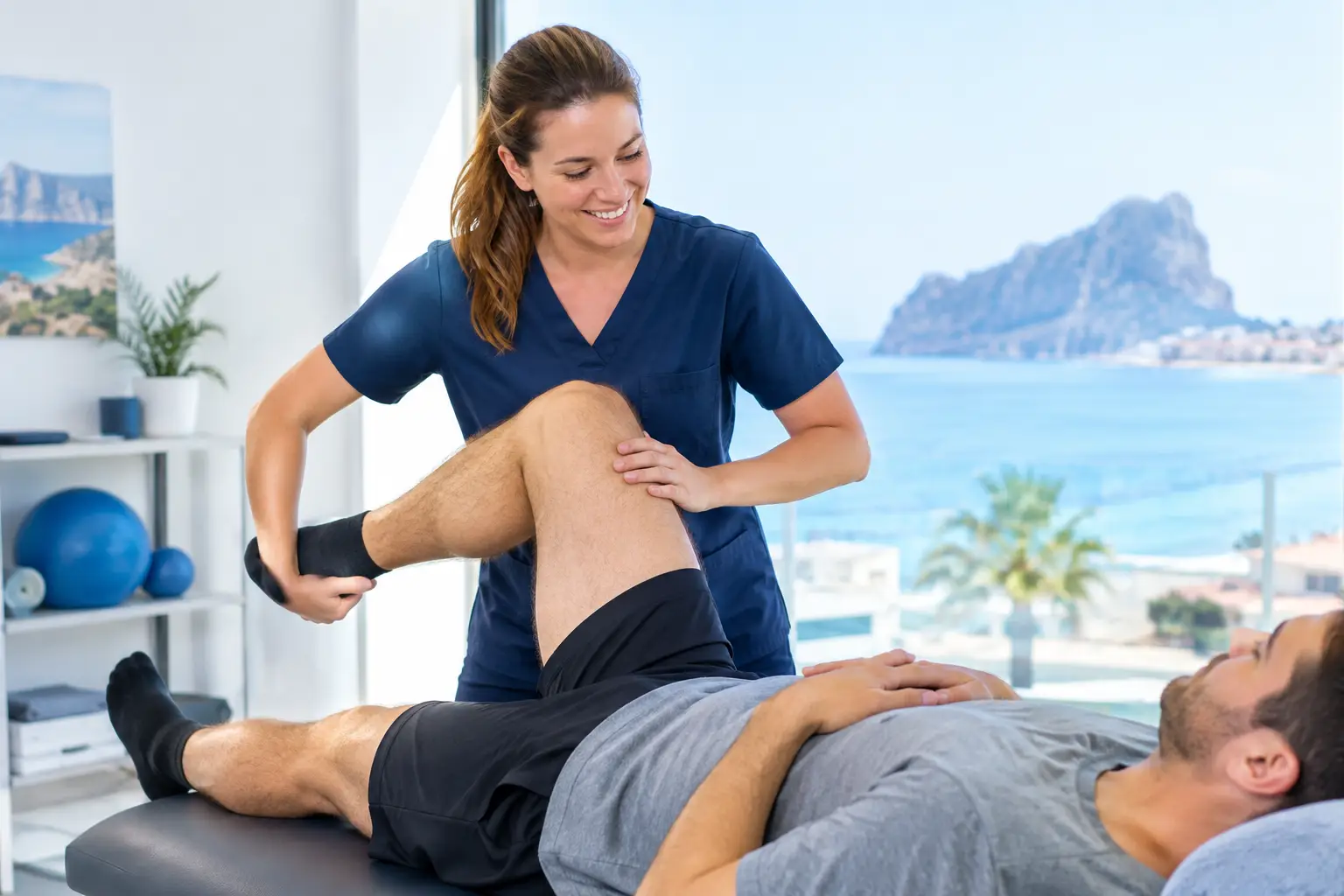
A painful back should not mean missing a walk along the seafront, relying on family for everyday tasks or putting off a visit with grandchildren. For many older residents, home physiotherapy visits in Costa Blanca make treatment possible when travelling to a clinic is difficult, uncomfortable or simply not sensible.
A home visit is not a lesser version of physiotherapy. When it is carried out properly, it is a detailed clinical appointment in the place where your mobility matters most: your own home. The physiotherapist can assess your pain, movement, balance and confidence, then build a plan around the activities you want to return to.
When home physiotherapy is the right choice
Home treatment can be particularly valuable after a fall, injury, operation or period in hospital. It is also a practical option for people living with severe sciatica, chronic back pain, osteoarthritis, nerve pain, swelling or reduced strength who find car journeys and waiting rooms difficult.
For some people, the barrier is not only physical. Pain can make leaving home feel uncertain. You may worry about managing steps, getting in and out of a car, or whether your leg will hold you while walking from the car park. Beginning rehabilitation at home can restore confidence before clinic-based treatment or exercise becomes appropriate.
It also helps when a partner or adult child is supporting your care. They can understand the plan, learn how to assist safely where needed, and see what changes will make daily movement easier. That may involve practising how to rise from your usual chair, turning safely in a narrow hallway or managing the steps at your entrance.
What happens during a home physiotherapy visit in Costa Blanca?
The first appointment should start with listening. Your physiotherapist will ask when symptoms began, what makes them better or worse, how pain affects sleep and walking, and whether you have noticed numbness, weakness, altered balance or changes in bladder or bowel control. Those details matter, particularly where nerve symptoms are involved.
This is followed by an assessment of posture, joint movement, muscle strength, walking pattern and balance. In your own home, the assessment is naturally practical. A physiotherapist can see the height of your bed, the chair you struggle to rise from or the bathroom layout that makes you feel unsteady. These observations often reveal more useful information than a generic exercise sheet ever could.
Treatment depends on the findings. It may include hands-on physiotherapy, gentle joint and soft-tissue techniques, guided movement, pain-relieving positions, balance work and a carefully chosen exercise programme. Where appropriate, your plan may also include advice on pacing activities, using heat or cold safely, and adapting tasks temporarily while your strength improves.
The aim is not to keep you dependent on appointments. It is to reduce pain where possible, improve how confidently you move and give you a clear route towards greater independence. Some conditions improve quickly; long-standing pain, neurological symptoms and post-operative weakness often need a steadier programme over several weeks. Honest expectations are part of good care.
Your home becomes part of the rehabilitation plan
A clinic gym has its place, but daily life does not happen in a gym. At home, exercises can be matched to the furniture and routines you already have. A stable kitchen worktop may support standing exercises. A firm chair can be used to practise sit-to-stands. The walk to your gate can become a measured walking goal.
This approach is especially helpful for senior rehabilitation because progress is meaningful when it transfers to real life. Being able to shower without fear, carry a cup of tea, walk to the local café or get into the car more comfortably can be as important as any number on an exercise machine.
Conditions that may benefit from treatment at home
Home physiotherapy is not suitable for every problem, but it can be highly effective for common musculoskeletal and mobility concerns. People often seek support for persistent lower-back pain, sciatica, neck and shoulder pain, hip or knee osteoarthritis, reduced balance, weakness after illness, and recovery following a joint replacement or fracture.
Nerve pain needs particular care. Symptoms such as burning, tingling, numbness or shooting pain may come from irritation or compression of a nerve, but the cause must be assessed rather than assumed. A clear examination helps determine whether conservative treatment is appropriate and whether further medical investigation is needed.
Physiotherapy can also support people whose movement has become smaller over time. Perhaps you stopped walking regularly because your knees hurt, then lost strength and confidence. Perhaps a previous fall has made you cautious. The pattern can become self-reinforcing, but gradual, supervised activity can help break it.
When urgent medical advice comes first
Physiotherapy is not a substitute for urgent medical care. Seek immediate medical help for sudden facial drooping, speech difficulty, chest pain, severe breathlessness, a new loss of bladder or bowel control, numbness around the saddle area, or rapidly worsening weakness. These symptoms need prompt assessment.
Likewise, a painful, hot and swollen calf, unexplained fever or severe pain after a significant fall should be medically checked before beginning treatment. A responsible physiotherapist will recognise when referral is the safest next step.
Why language and continuity matter
Explaining pain in a second language can be tiring, especially when symptoms are complicated or you are worried. English- and Swedish-speaking patients should be able to describe what they feel clearly and ask questions without rushing. Good treatment relies on shared understanding: what the diagnosis may mean, what to do between visits and what changes should prompt a call.
Continuity matters too. Chronic pain rarely has one simple cause or one-session answer. The most useful care follows your progress, adjusts exercises when they become easier, and recognises when a different approach is needed. NordicFysio combines home support with clinic assessment, diagnostic ultrasound where clinically relevant, and supervised therapeutic exercise for people ready to progress further.
That progression may move from pain-relieving movement at home to short outdoor walks, then to strength and balance work in a senior gym. It depends on your starting point, goals and confidence. Home visits can be the beginning of recovery, or an ongoing service where mobility remains limited.
Preparing for your appointment
You do not need to turn your home into a treatment room. Wear comfortable clothing that allows movement, keep any relevant scan reports or medication information nearby, and make a note of your main questions. If you use a walking stick, rollator or other aid, have it available so it can be checked as part of the assessment.
Try to be specific about the moments that trouble you most. Is it getting out of bed? Walking after sitting? Standing long enough to cook? Pain travelling down the leg at night? These details help create a plan that is personal rather than generic.
If a family member is involved in your care, it can be helpful for them to be present for part of the session. They do not need to speak for you, but they may remember practical concerns and benefit from advice about safe support.
Frequently asked questions
Do I need a doctor’s referral?
Not usually. You can arrange a physiotherapy assessment directly. However, if your symptoms suggest a condition requiring medical review, you may be advised to contact a doctor before or alongside treatment.
Will treatment be painful?
Rehabilitation should be challenging at times, but it should not feel reckless. Your physiotherapist will work within a tolerable level and adjust treatment if symptoms flare. Temporary muscular soreness can occur when you start moving more, while sharp, worsening or unfamiliar pain should always be reported.
Can I continue home visits if I improve?
Yes, if home remains the most suitable setting. Others choose to transition to clinic appointments or supervised exercise once they can travel more comfortably. The right arrangement is the one that supports steady progress without creating unnecessary strain.
Pain and limited mobility can shrink your world gradually, often before you realise how much you have given up. A careful assessment at home is a practical first step towards moving with more confidence and spending more time doing the things that still matter to you.