

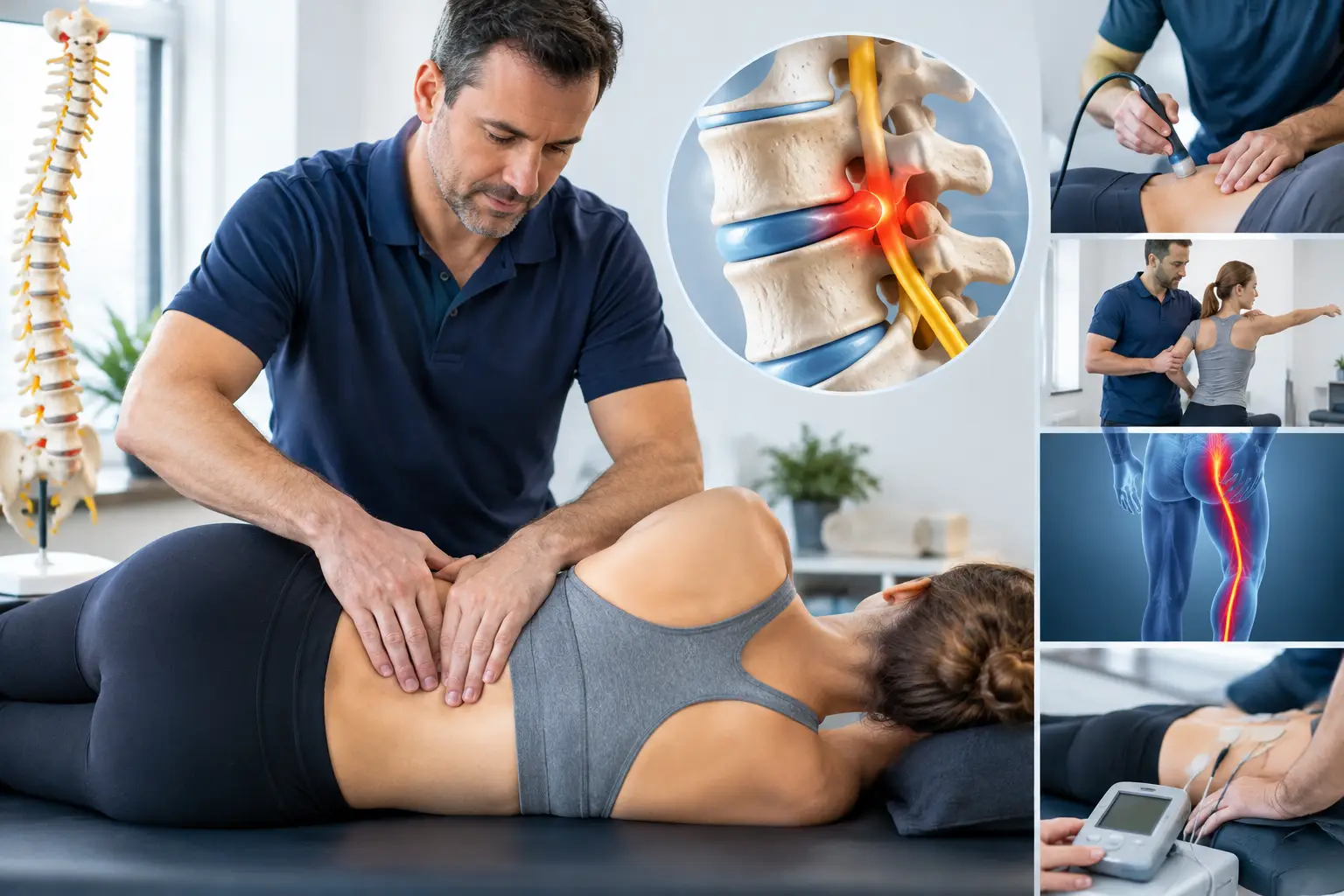
Getting out of a car, turning in bed or standing long enough to cook a meal should not require a strategy. Yet for many people, persistent pain gradually makes everyday life smaller. Back pain physiotherapy should begin by asking why those particular movements still hurt, rather than simply repeating the same treatment or handing over a standard exercise sheet.
For some people, back pain settles with time and sensible activity. For others, it lingers for months, returns whenever they walk further or sit longer, or begins to travel into the buttock, leg or foot. That can be especially frustrating when you have already tried massage, medication, injections, exercises or other hands-on treatment without getting back to the things you enjoy.
Why back pain can persist
The back is not one simple structure, and pain is not always a reliable map of the exact tissue involved. A sore lower back may be influenced by joint stiffness, disc sensitivity, reduced movement in the hips, changes in muscle control, spinal narrowing, osteoarthritis, nerve irritation or a combination of factors. Sometimes a person’s most troublesome symptom is in the leg rather than the back itself.
This is why two people with the same scan result can have very different symptoms and needs. A disc bulge on a scan does not automatically explain pain, while a normal-looking scan does not mean somebody’s symptoms are imaginary. The useful question is whether the clinical findings, movement pattern and symptoms fit together.
A common example is the person who can manage around the house but develops aching, heaviness, tingling or pain down the leg after ten minutes of walking. Another may be comfortable walking but unable to tolerate driving from Ciudad Quesada to Torrevieja. These patterns offer clues. They are more helpful than assuming that every painful back needs the same adjustment, stretch or strengthening programme.
Back pain physiotherapy is more than treatment on a couch
A thorough physiotherapy assessment looks at the problem in context. When did it start? What has changed since then? Which movements bring symptoms on, and what reliably eases them? Is there numbness, weakness, altered balance or pain below the knee? How are sleep, walking, stairs, sitting and confidence affected?
Assessment also involves observing how you move, testing relevant strength and mobility, and where appropriate checking nerve-related signs. The aim is not to make the appointment feel complicated. It is to avoid treating a label when the real problem is a particular movement intolerance, loss of capacity or nerve sensitivity.
For someone who has tried several treatments, this can be a relief. Persistent symptoms do not necessarily mean that nothing can help. They may mean the original explanation was incomplete, the plan did not progress far enough, or the treatment did not match the factors maintaining the problem.
When pain travels, the assessment needs to look wider
Sciatica is often used to describe any pain in the buttock or leg, but not every radiating symptom is the same. True nerve-related symptoms can include burning, electric-shock sensations, pins and needles, numbness or weakness. They may be linked with irritation of a nerve root, narrowing around the spine, sensitivity along the nerve pathway or other causes.
Equally, pain referred from the back, hip or surrounding tissues can feel surprisingly similar. This is one reason self-diagnosis can be misleading. The location of pain matters, but so do the pattern, neurological signs and the situations that trigger it.
If you have previously seen a chiropractor or another therapist and still have back or leg pain, it does not mean that treatment was necessarily wrong. It may simply be time for a more detailed reassessment. Persistent symptoms often need a plan that combines hands-on physiotherapy with graded rehabilitation and clear measures of progress.
What a personalised plan may include
Treatment should follow the assessment, not the other way round. At NordicFysio, the clinical team may use advanced manual physiotherapy, the POLD Method, SCENAR neuromodulation, therapeutic exercise and rehabilitation where these approaches are appropriate to the individual.
Hands-on treatment can help some people move more comfortably or reduce sensitivity enough to begin rebuilding confidence. It is rarely the whole answer on its own. If pain has made you avoid walking, lifting, gardening or playing with grandchildren, rehabilitation needs to gradually restore the strength, movement and tolerance those activities require.
That progression is not about pushing through severe pain or pretending symptoms do not matter. It is about finding a level that is manageable, repeating it consistently, and increasing it when your body is ready. For one person that may begin with standing from a chair more efficiently. For another, it may involve improving leg strength, walking tolerance or control during bending and lifting.
The trade-off is that meaningful rehabilitation asks for participation as well as treatment. There is no single exercise that suits every back, particularly when arthritis, spinal stenosis, previous surgery, diabetes, reduced balance or nerve symptoms are part of the picture. But a plan that is specific and realistic is far more likely to become part of daily life.
A short patient story that may feel familiar
A retired holiday-home owner came in because his back pain had become “normal”. He could still do the supermarket shop, but only by leaning on the trolley. Sitting at dinner brought tingling into one calf, and a morning walk had been replaced by staying at home. He had tried several treatments over the years, each providing brief relief without changing what he could actually do.
The key finding was not one dramatic diagnosis. It was a recognisable pattern of reduced walking tolerance, leg weakness and symptoms affected by spinal position. His programme focused on the positions and movements he tolerated best, alongside manual treatment and gradual strength work. Progress was tracked by practical markers: how far he could walk, how easily he rose from a chair and whether he could enjoy an outing without planning every seat along the way.
Not every person will have the same pattern or response. The point is that success should be measured in life as well as pain scores. Less pain matters, but so does being able to travel, sleep, walk on the promenade or spend time with family without constant calculation.
When to seek medical assessment promptly
Most back pain does not indicate a medical emergency, but certain symptoms need urgent assessment. Seek immediate medical help for new loss of bladder or bowel control, numbness around the genitals or inner thighs, rapidly worsening leg weakness, significant trauma, fever with severe back pain, or unexplained weight loss alongside persistent symptoms.
A clinician may also advise GP, specialist or surgical assessment when symptoms or examination findings suggest that conservative care alone is not the right next step. Physiotherapy and medical care are not competing routes. Good care means recognising when each is needed.
What to do while waiting for an assessment
Keep a brief note of what aggravates and eases your symptoms over several days. Include walking distance, sitting time, sleep disruption and any pins and needles or weakness. This makes patterns clearer than trying to remember everything in an appointment.
Try not to stop all movement unless you have been specifically advised to do so. Gentle, tolerable movement is often preferable to long periods of guarding, although the right amount depends on your symptoms. Avoid repeatedly testing painful movements to see whether they are “fixed” yet. That habit can make a sensitive back feel more threatening and provides little useful information.
If back pain has been limiting your independence, an assessment-led approach can provide a clearer starting point. Whether you are based in Aguas Nuevas, Punta Prima, Ciudad Quesada or elsewhere on the southern Costa Blanca, the next useful step is not always more treatment. Sometimes it is finally understanding the problem well enough to build a plan around the life you want to return to.