

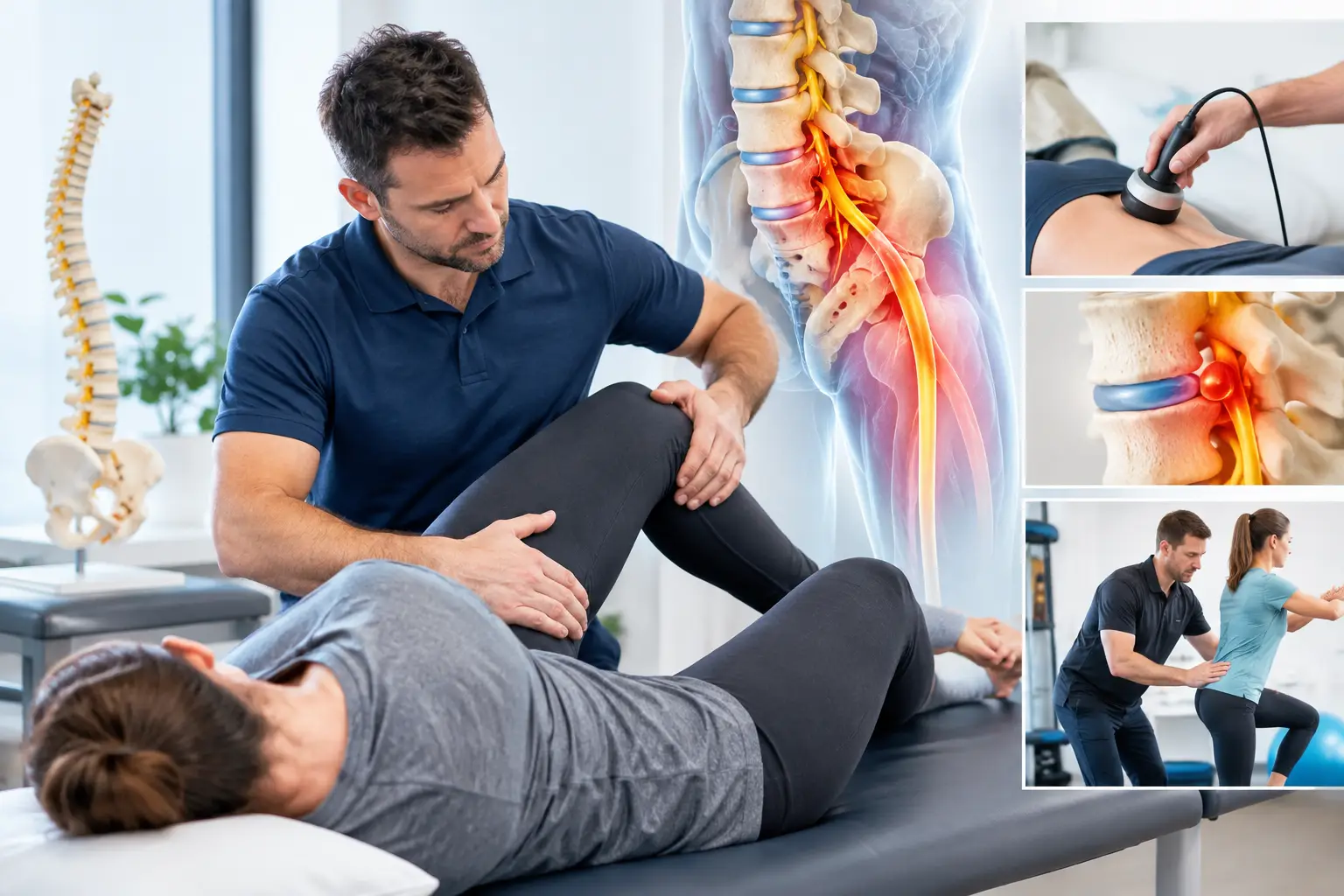
The pain may begin as an ache in the buttock, then appear down the back of the thigh when you stand from a chair. For some people, it is a sharp, electric pain when getting out of the car. For others, it is tingling in the calf, a numb foot, or a leg that simply does not feel trustworthy on a walk. Effective sciatica physiotherapy treatment should not start with a standard exercise sheet. It should start by asking why your symptoms are still there.
That question matters particularly if you have already tried massage, medication, injections, exercises or treatment elsewhere, yet still plan your day around your back and leg. Persistent symptoms are frustrating, but they are also useful information. They suggest that the original explanation, the treatment plan, or both may need a closer look.
Sciatica is a symptom, not a complete diagnosis
Sciatica describes symptoms that travel along the course of the sciatic nerve, usually from the lower back or buttock into the leg. The familiar signs can include burning, pins and needles, altered sensation, heaviness, weakness or pain below the knee. Yet two people who both say, “I have sciatica”, may need very different care.
A disc-related problem can irritate a nerve root in one person. In another, narrowing around the spinal nerves, often called spinal stenosis, may make walking and standing increasingly difficult. Hip and pelvic structures, muscle sensitivity, reduced movement after an old injury, or more than one contributing factor can also affect the picture. This is why an MRI finding alone does not always explain how someone feels or what they can do.
A useful clinical insight is that pain intensity does not reliably tell us the severity of tissue damage. A person may have dramatic pain but retain good strength and steadily improve with appropriate rehabilitation. Someone else may have less pain but developing weakness in the foot, which needs more urgent medical attention. Careful assessment gives those differences the attention they deserve.
What a thorough sciatica assessment should explore
A proper assessment is more than locating where the pain is felt. It considers when symptoms started, what has changed, what you have already tried and what daily activities have become difficult. Driving from Ciudad Quesada to Torrevieja, standing to prepare a meal, walking along the promenade, sleeping, putting on shoes or carrying shopping can all provide useful clues.
Your physiotherapist should examine movement in the spine, hips and legs, test strength and reflexes where appropriate, and assess sensation and nerve-related responses. They may look at how you walk, rise from a chair, balance and tolerate positions such as sitting, bending or standing. The aim is not to force a label onto every case. It is to identify the most likely drivers of your symptoms, rule out concerns that require medical referral, and establish a clear baseline for progress.
This approach can be especially valuable for adults over 50. Changes such as osteoarthritis, disc wear and spinal narrowing are common with age, but they do not automatically explain pain. The key question is how these findings relate to your symptoms, your physical capacity and the life you want to return to.
When sciatica needs urgent medical assessment
Most sciatica does not require emergency care, but certain symptoms should never be managed by waiting for a routine appointment. Seek urgent medical advice if you develop new difficulty controlling bladder or bowel function, numbness around the saddle area, rapidly worsening leg weakness, or severe symptoms following significant trauma. Unexplained fever, feeling generally unwell, a history of cancer or unexplained weight loss also warrant prompt medical assessment.
These signs do not mean the worst is certain. They mean it is sensible to check quickly and thoroughly.
Sciatica physiotherapy treatment is tailored, not copied
Once the assessment has identified the priorities, treatment should have a reason behind it. If sitting is aggravating an irritable nerve-related problem, the first stage may involve changing positions, settling symptoms and building tolerance gradually. If walking is limited by spinal stenosis, the plan may focus more on improving mobility, leg strength, pacing and confidence with walking.
At NordicFysio, treatment may combine advanced manual physiotherapy, the POLD Method, SCENAR neuromodulation, therapeutic exercise and rehabilitation. These are not interchangeable treatments or automatic add-ons. The right approach depends on your examination findings, medical history, goals and response over time.
Manual treatment may help some patients move more freely or tolerate exercise with less discomfort. Neuromodulation may be considered where pain sensitivity and nerve-related symptoms are a significant part of the presentation. Exercise is usually important, but it should be selected and progressed with care. The wrong exercise at the wrong stage can feel discouraging, while a well-chosen one can help you regain trust in your body.
A good plan also includes measurable goals. Perhaps you want to walk for 20 minutes without having to sit down, drive comfortably to see family, sleep without repeatedly waking, or return to golf and swimming. These goals are more meaningful than simply being told to “strengthen your core”.
Why generic exercises often fail
Many people arrive with a folder of exercises collected from past appointments, online videos or well-meaning friends. The issue is rarely a lack of effort. It is that exercises are often given without enough attention to timing and diagnosis.
Consider two people with leg pain. One feels worse after prolonged sitting and improves with short walks. The other can sit comfortably but develops burning pain after standing in a queue. Giving them the same programme may not make clinical sense. Their symptoms are being triggered differently, and their capacity may be different too.
The answer is not to avoid movement. Long-term avoidance can reduce strength, mobility and confidence. Instead, rehabilitation should find the amount and type of movement you can tolerate now, then build from there. Sometimes that means beginning with very small changes: a different way to get out of bed, a brief walk before symptoms build, or a simple strength exercise that does not provoke leg pain.
Progress is rarely perfectly linear. A flare-up after gardening, travelling or an unusually busy week does not automatically mean you have caused new damage. It may mean the load exceeded your current capacity. Understanding that distinction helps people respond calmly and adjust their plan rather than stopping all activity.
If you have tried treatment before without enough improvement
Previous treatment is not wasted simply because it did not solve the problem. It tells us what helped, what aggravated symptoms and what may have been overlooked. Some people need a more detailed nerve and strength assessment. Others need a rehabilitation plan that is progressed more deliberately. Others need coordination with their GP, specialist or imaging provider because the clinical picture has changed.
The most useful next step is often not a more forceful treatment, but a more precise one. This is particularly true when symptoms have persisted for months, pain has spread, walking distance is shrinking, or you feel increasingly nervous about ordinary movement.
For English-speaking and Scandinavian residents on the southern Costa Blanca, an assessment at a clinic in Aguas Nuevas, Punta Prima or Ciudad Quesada can provide space to discuss the whole history rather than focusing only on today’s pain level. The clinical team, led by Álvaro Asensio García, can explain what the examination suggests, what treatment options are reasonable and when medical review should be part of the plan.
The goal is confidence as well as symptom relief
Sciatica can make life smaller. You may turn down a walk with friends, choose restaurants based on the chairs, or feel anxious before a journey because you do not know how your leg will react. Physiotherapy should recognise that loss of confidence, not dismiss it.
The aim is to reduce pain where possible, improve movement and rebuild the ability to do the things that matter to you safely. Some cases settle relatively quickly; others need a longer, more gradual rehabilitation process. What matters is that the plan is based on your presentation, reviewed against real progress and adjusted when needed.
If your back and leg symptoms are still shaping every decision you make, a detailed assessment may offer a more useful starting point than another generic solution. Bring your questions, your previous treatment history and the activities you miss most. They are often the clues that help point treatment in the right direction.