

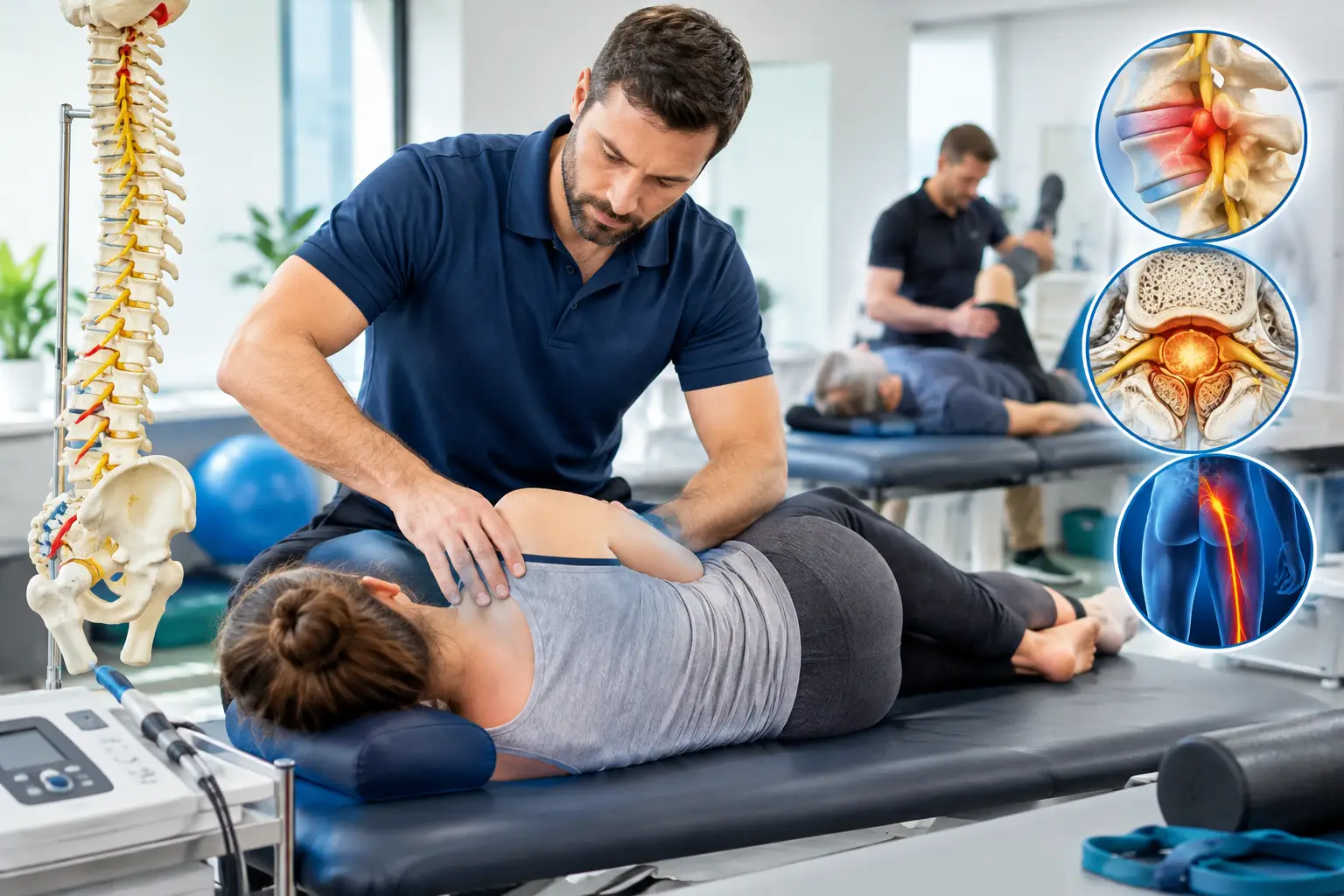
Getting out of the car, standing at the kitchen counter or turning in bed should not require a calculation of where the pain will strike. Yet for many people, especially after months of back, leg, neck or joint symptoms, the next conversation with a doctor can feel like it is heading towards surgery. Physiotherapy to avoid surgery can be a sensible route for some people, but only when it begins with a clear understanding of what is limiting them and when it is paired with realistic medical decision-making.
The aim is not to persuade someone to delay an operation they genuinely need. It is to make sure that surgery is being considered for the right reason, after the non-surgical options that fit the person and the diagnosis have been properly explored.
Why surgery is not always the first answer
Scans can be useful, but they do not tell the whole story. An MRI may show disc changes, narrowing around the spine or arthritis, particularly after the age of 50. Some of these findings are relevant. Others are common in people who have little or no pain.
What matters is the full pattern: when symptoms began, what makes them worse or better, whether pain travels into an arm or leg, changes in strength or sensation, walking tolerance, sleep and how the condition affects everyday life. Two people can have similar scan reports yet need very different plans.
This is where people can become understandably frustrated. They may have had a massage, a few exercises from a leaflet, medication, an injection or another course of treatment, but still cannot walk comfortably along the promenade or sit through a drive to Alicante. That does not automatically mean surgery is the only remaining option. It may mean the original reason symptoms persist has not yet been identified clearly enough.
For some conditions, conservative care is often recommended before elective surgery because symptoms can improve with the right combination of movement, rehabilitation and symptom management. This can apply to some disc-related pain, osteoarthritis, spinal stenosis, certain shoulder problems and persistent neck or back pain. The detail matters, however. A rehabilitation plan for painful knee arthritis should not look like a plan for leg pain that appears to be nerve-related.
What physiotherapy to avoid surgery should involve
Physiotherapy is sometimes reduced to exercises, hands-on treatment or a short appointment focused only on where it hurts. Those can be useful elements, but persistent symptoms usually deserve more than a standard approach.
A thorough assessment looks at the story behind the pain and tests what the body can currently do. This may include mobility, strength, balance, walking, functional movements such as rising from a chair, and neurological signs where there is tingling, numbness or radiating pain. Progress should be measurable. If walking tolerance was five minutes at the start, the question is whether it is improving, staying the same or deteriorating.
At NordicFysio, assessment-led treatment may combine advanced manual physiotherapy, therapeutic exercise and rehabilitation with approaches such as the POLD Method or SCENAR neuromodulation where clinically appropriate. The choice is not based on a fashionable technique. It is based on what the assessment suggests may help the individual move, load and function more effectively.
A useful plan normally has two jobs. First, it should help reduce barriers to movement, such as pain sensitivity, stiffness, fear of a particular movement or poor tolerance to standing and walking. Second, it must gradually rebuild capacity. That could mean improving hip and trunk strength for someone with back pain, building leg endurance for someone whose spinal stenosis limits walking, or restoring confidence on stairs after a knee flare-up.
The overlooked part: loading at the right dose
Many people do too much on a better day and then spend the next two days recovering. Others avoid activity completely because they have been told, or have come to believe, that pain always means damage. Both patterns can make recovery harder.
The answer is rarely to push through severe symptoms or to rest indefinitely. It is to find an appropriate starting level and progress it carefully. A person may begin with short, frequent walks rather than one ambitious outing. Someone who cannot tolerate sitting may need planned position changes during a journey. These small adjustments are not glamorous, but they often make rehabilitation achievable.
A good clinician will also be honest when the response is not as expected. If symptoms are worsening, if strength is declining, or if progress repeatedly stalls despite an appropriate plan, the next step may be medical review rather than simply more of the same treatment.
When rehabilitation may be particularly worthwhile
Conservative physiotherapy is often worth discussing when pain has limited life but there is no urgent surgical indication, when weakness and mobility problems may respond to conditioning, or when surgery has been suggested as an elective option rather than an emergency. It can also be valuable before an operation. Better strength, movement confidence and general fitness may support recovery afterwards, even if surgery remains the right choice.
Consider the common example of someone with pain from the lower back into the buttock and leg. They may assume every symptom is caused by a trapped nerve. Sometimes nerve irritation is part of the picture; sometimes referred pain, joint stiffness, reduced hip strength, sensitivity of the nervous system or several factors are involved. The assessment should distinguish between these possibilities as far as possible, rather than treating every radiating pain in the same way.
Another example is knee osteoarthritis. A scan may show significant wear, yet the most limiting problem might be poor confidence loading the leg after repeated painful episodes. Improving quadriceps strength, balance and walking tolerance will not reverse arthritis, but it may improve day-to-day function and help a person make a more informed decision about surgery.
When surgery or urgent medical assessment should not be delayed
Avoiding surgery is not the goal at any cost. Surgery can be appropriate and beneficial in some cases, including when structural problems match the symptoms and there is significant functional loss despite suitable conservative care.
Urgent medical assessment is needed for new loss of bladder or bowel control, numbness around the saddle area, rapidly worsening leg or arm weakness, severe symptoms after significant trauma, or symptoms accompanied by unexplained fever, weight loss or a history that raises concern for serious illness. These are not symptoms to manage through home exercises or wait-and-see advice.
Even without emergency signs, persistent pain deserves review when it is steadily worsening, repeatedly disrupting sleep, severely reducing walking or independence, or not responding as expected. A physiotherapist should work alongside medical professionals, not position rehabilitation as a substitute for necessary investigation or surgical opinion.
Questions to ask before deciding
Before agreeing to surgery, it can help to ask what problem the operation is intended to solve, how closely the scan findings match the symptoms, and what functional improvement is realistically expected. It is also reasonable to ask whether a focused course of rehabilitation has been tried and measured, rather than simply attempted.
The same questions apply to physiotherapy. What is the working explanation for the symptoms? Which activities are being measured? What would count as meaningful progress? And at what point should the plan be reviewed or referred onwards? Clear answers replace false reassurance with a process that can be evaluated.
For English-speaking residents and visitors in Torrevieja, Punta Prima and Ciudad Quesada, an assessment can be particularly useful when previous treatment has not provided a clear explanation. It creates space to look beyond the painful area, identify what is modifiable and decide whether rehabilitation, medical review or a surgical opinion is the most sensible next step.
Pain may have narrowed your routine for a long time, but the decision does not have to be made in a rush or based on a scan alone. A careful assessment can help you understand your options and choose the path that best protects your mobility, independence and time with the people you value.