

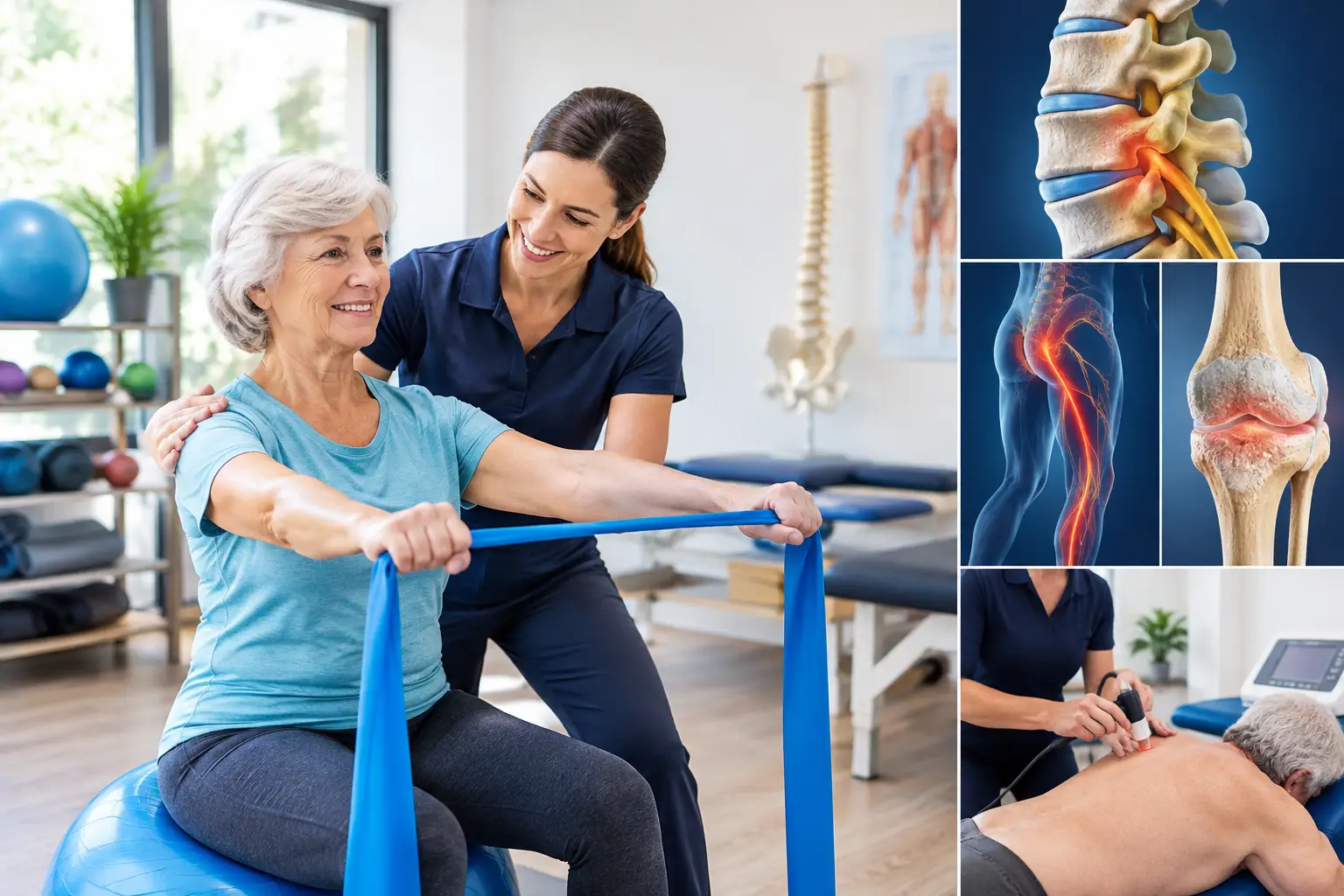
A gym can be one of the best places to rebuild confidence after pain, injury or a period of reduced activity. It can also be the wrong place to copy a standard exercise routine and hope for the best. Senior gym rehabilitation programmes work best when they begin with the reason movement has become difficult, rather than with a generic list of exercises.
For many adults over 50, the issue is not simply being ‘out of shape’. It may be osteoarthritis, persistent back pain, sciatica, spinal stenosis, a previous joint replacement, poor balance, nerve-related symptoms or fear after a fall. Some people can walk comfortably but struggle with stairs, getting out of a chair or carrying shopping. Others have tried physiotherapy, massage, medication or classes before, yet still feel limited.
The right rehabilitation plan should meet you where you are now, while giving you a clear and measurable route towards greater strength, mobility and independence.
What senior gym rehabilitation programmes are designed to do
Rehabilitation in a gym setting is not about pushing through pain or trying to perform like you did twenty years ago. It is a structured way to restore useful physical capacity: the ability to stand, walk, turn, reach, lift, climb steps and stay active in everyday life.
A well-designed programme usually addresses strength, balance, joint mobility, endurance and confidence together. These qualities overlap. Stronger leg muscles can make stairs easier, but balance and hip movement may still limit how secure you feel on them. Better shoulder movement may help you reach a cupboard, but neck symptoms or nerve irritation can affect how much load is appropriate.
This is why a programme should have a purpose beyond completing sets and repetitions. The aim may be less pain during daily activity, better walking tolerance, safer transfers, or returning to golf, swimming, gardening and time with family. Pain reduction is often an important goal, but function gives rehabilitation its direction.
Why assessment comes before exercise
Two people of the same age with ‘bad knees’ can need very different plans. One may mainly be limited by knee osteoarthritis and reduced thigh strength. Another may have pain referred from the hip or lower back, altered sensation in the leg, or a balance problem that makes loading the knee feel unsafe.
Starting with an assessment helps separate these possibilities. A clinician should listen to your history, assess movement, strength, balance, walking and relevant nerve symptoms, then consider what aggravates and eases your problem. If you have had scans, operations, injections or previous treatment, those details may be useful, but they do not replace a physical assessment.
At NordicFysio, the clinical team uses this assessment-led approach to understand why symptoms persist before choosing treatment and rehabilitation. For patients in Torrevieja, Punta Prima, Ciudad Quesada and surrounding areas, that can be particularly valuable when previous exercises have felt too painful, too easy or unrelated to the problem.
Assessment also identifies when gym rehabilitation should be delayed or adjusted. New or worsening weakness, significant loss of balance, severe unrelenting pain, changes in bladder or bowel function, or unexplained symptoms may need prompt medical assessment. Rehabilitation is valuable, but it should never ignore signs that need further investigation.
The right starting point is often more modest than expected
Many people imagine a gym programme means treadmills, heavy weights and long sessions. In rehabilitation, the starting point may be much simpler. A chair rise, supported squat, low step-up, gentle rowing movement or controlled carry can reveal a great deal about strength, coordination and symptom response.
The most effective starting load is not always the lightest possible exercise. It is the load you can perform with reasonable control and recover from. If an exercise causes a small, temporary increase in familiar symptoms that settles quickly, it may be acceptable in some situations. If it produces sharp pain, spreading numbness, marked weakness or symptoms that continue to worsen afterwards, the exercise needs review.
This is one reason ‘no pain, no gain’ is unhelpful advice for many older adults. Some rehabilitation requires effort and temporary muscle fatigue. That is different from repeatedly provoking a joint, back or nerve problem without a plan.
Building strength for daily tasks
Strength work is often central because muscle loss and reduced activity can make ordinary movements surprisingly demanding. The programme should focus on movements that transfer to life outside the gym: sitting and standing, stepping, walking, lifting light objects and maintaining an upright posture.
Machines can be useful because they offer stability and allow precise adjustments. Free weights, resistance bands and bodyweight exercises can also be appropriate. There is no single superior tool. The choice depends on your symptoms, confidence, balance, experience and access to equipment.
For example, a leg press may suit someone who needs to strengthen the legs without worrying about balance at first. A supported split squat might later help build control for stairs. The progression matters more than whether an exercise looks advanced.
Balance is a skill, not an afterthought
Balance can decline for many reasons, including pain, reduced leg strength, altered sensation in the feet, medication effects, inner-ear problems and lack of practice. It should not be treated as a quick warm-up exercise added at the end of a session.
Good balance training is specific and safely challenging. It may begin with weight shifts near a support, then progress to stepping patterns, turning, controlled single-leg work or walking tasks. A person who feels unsteady outside may need to practise the situations that worry them, rather than only standing still on one leg.
If you have recently fallen, feel dizzy, or notice a sudden change in balance, seek appropriate clinical advice before trying to challenge yourself in a busy gym.
Progression should be measured, not guessed
A rehabilitation programme should change as your capacity changes. Staying with very easy exercises can maintain movement but may not build enough strength to improve everyday function. Increasing everything too quickly, however, can create a flare-up that undermines confidence.
Useful measures might include the number of chair rises completed with good form, walking distance before symptoms increase, step tolerance, grip strength, a balance task or the amount of resistance used comfortably. These markers turn rehabilitation into evidence rather than guesswork.
Progress is rarely perfectly linear. A busy week, poor sleep, a long journey or a temporary pain flare can affect performance. That does not mean the programme has failed. It may mean the dose needs to be adjusted, recovery needs more attention, or an underlying factor has become more relevant.
For persistent back pain, sciatica or nerve-related symptoms, progression may need particularly careful monitoring. Leg pain does not always mean the same thing, and exercises that help one person may be unsuitable for another. A tailored plan can include gym-based strengthening alongside manual physiotherapy, therapeutic exercise or other appropriate treatment when clinically indicated.
How often should you train?
Consistency matters more than heroic sessions. For many people, two or three structured strength-focused sessions each week, with walking or other gentle activity between them, is a realistic foundation. The exact frequency depends on recovery, symptoms, other health conditions and how demanding each session is.
The best plan is one you can continue. A programme that requires daily travel to a gym may be less practical than a mix of supervised sessions and simple home exercises. Equally, some people need the equipment, structure and reassurance of a gym to progress beyond what is possible at home.
The important question is not, ‘What is the perfect programme?’ It is, ‘What amount of activity can I perform safely, repeat consistently and gradually build on?’
Choosing support when pain has lasted too long
If you have been avoiding activity because of pain, it is understandable to be cautious. But avoiding every difficult movement can gradually reduce strength, fitness and confidence, making life smaller than it needs to be. The answer is not to ignore symptoms. It is to understand them and introduce the right amount of movement with a clear purpose.
Senior gym rehabilitation programmes should leave you feeling more capable over time, not simply exhausted after a session. With careful assessment, sensible progression and support when symptoms are complex, the gym can become less of an intimidating environment and more of a practical place to reclaim the activities that matter to you.