

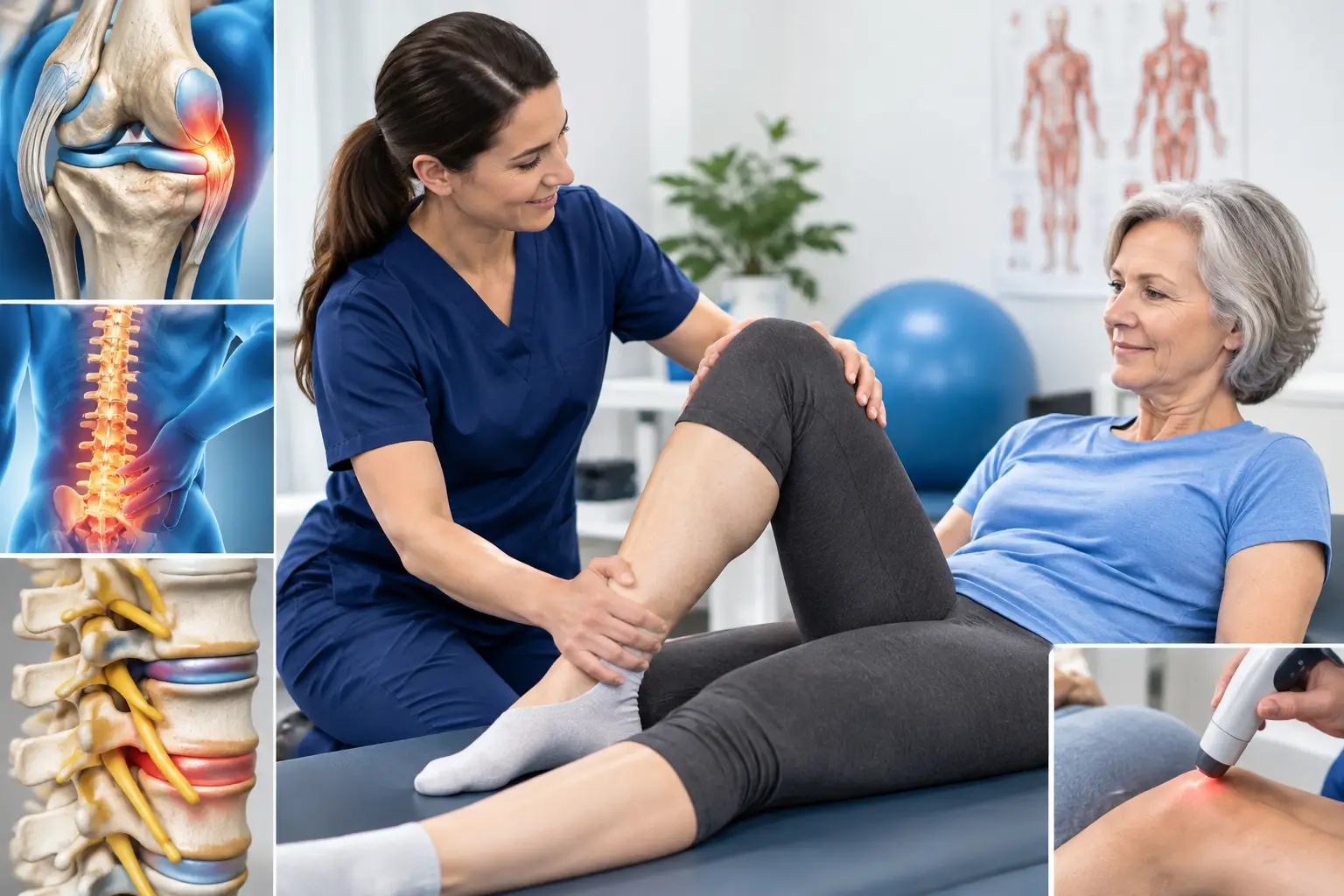
Getting up from a low chair, walking along the promenade or carrying shopping can become tasks you plan around when a joint is painful and stiff. Therapeutic exercise for osteoarthritis is not about forcing an arthritic knee, hip or hand through pain. It is a structured way to help you move with more confidence, maintain strength and keep doing the activities that matter to you.
For many people, the difficulty is not a lack of effort. They may have tried a generic exercise sheet, stopped because it aggravated symptoms, or been told simply to “keep active” without being shown what that means for their particular joint. A useful rehabilitation plan starts by understanding what is limiting you now.
Why exercise is part of osteoarthritis treatment
Osteoarthritis involves changes within a joint, but its effect is wider than the joint surface shown on an X-ray. Pain can lead you to move less. Over time, the muscles that support the joint can lose strength, balance can decline and everyday movements may feel less secure. Stiffness can then become more noticeable, particularly after sitting, driving or first thing in the morning.
Appropriately chosen exercise can address these changes. It can improve the strength of muscles around a painful joint, maintain or increase movement where appropriate, and improve your ability to tolerate walking, stairs, gardening or getting in and out of a car. It may also help you feel less guarded about movement.
This does not mean exercise reverses osteoarthritis or that everyone should follow the same routine. The right approach depends on the joint involved, how irritable symptoms are, your previous activity level, other health conditions and what you want to get back to doing. Someone with knee pain when descending stairs needs a different emphasis from someone with hip stiffness affecting shoes and socks, or hand osteoarthritis making it difficult to open jars.
Therapeutic exercise for osteoarthritis is not a standard sheet
A therapeutic exercise programme has a purpose behind every exercise. Rather than collecting movements at random, it identifies the physical factors most likely to be holding you back and builds them up at a tolerable pace.
Start with the activity that has become difficult
A careful assessment looks beyond the diagnosis. Which joint is affected? Is pain mainly present on starting to move, after longer walks or at night? Has your walking pattern changed? Are you avoiding stairs, losing confidence outdoors or relying more heavily on the other leg?
The answers help shape the plan. Reduced knee control may make stairs difficult. Hip weakness or restricted movement may affect walking and balance. Pain in more than one joint may mean that exercise needs to be paced more carefully. If back pain, sciatica-like symptoms, numbness or leg weakness are also present, it is particularly important not to assume that every symptom comes from osteoarthritis alone.
Build strength without treating pain as a test of character
Muscle strength matters because muscles help control load through a joint during daily life. For knee osteoarthritis, this often includes the thigh, hip and calf muscles. For hip osteoarthritis, strengthening may focus on the hip muscles as well as the legs and trunk. Hand programmes may include gentle grip, finger and thumb work when appropriate.
Exercises should be challenging enough to create a training effect, but not so demanding that they trigger a prolonged flare-up. This is where a personalised plan is more useful than being told to do endless repetitions. The resistance, range, speed and number of sessions can all be adjusted.
A mild increase in discomfort during or shortly after exercise is not always a sign of harm, especially when a joint has been inactive for some time. However, pain that is sharp, causes limping, swelling or disturbed sleep, or remains substantially worse into the following day suggests that the programme may need modifying. The aim is steady progress, not proving how much you can tolerate.
Restore useful movement and confidence
Strength alone is rarely the whole answer. A programme may also include mobility work for a stiff joint, balance exercises if you feel unsteady, and practice of the movements you need in real life. That could mean practising a controlled sit-to-stand, stepping up, turning safely or building walking tolerance in stages.
This practical element is particularly valuable for adults who have become less active after months or years of pain. The goal is not perfect movement. It is to make daily life feel more manageable and to reduce the fear that an ordinary activity will inevitably make things worse.
How to pace exercise when symptoms fluctuate
Osteoarthritis rarely behaves in exactly the same way every day. A busy weekend, a long journey, poor sleep, a change in weather or simply doing more than usual can make a joint feel more sensitive. Stopping all movement whenever symptoms rise can lead to further stiffness and loss of strength, but pushing through a significant flare can be equally unhelpful.
Pacing is the middle ground. On a better day, avoid suddenly doubling your walking distance or completing several demanding jobs at once. On a more difficult day, reduce the load rather than abandoning the routine altogether. You might use a smaller movement, fewer repetitions, a shorter walk or gentler mobility work, then build back up as symptoms settle.
Keeping a simple note of activity and symptom response for a couple of weeks can reveal useful patterns. This is not about monitoring every ache. It is about learning what your current baseline is, and increasing it gradually enough that your body can adapt.
Exercise options: choose the one you can continue
There is no single best exercise for every person with osteoarthritis. The most effective type is usually the one that suits your joints, fitness, preferences and access to equipment well enough for you to keep doing it.
Walking can be excellent for some people, but it is not the only option. Cycling may feel more comfortable for a painful knee. Water-based exercise can reduce the feeling of load for people whose hips, knees or back are sensitive. A supervised strength programme may be preferable if balance is limited or you are unsure how to use equipment safely. Gentle exercise classes can provide routine and social support, while a home programme may be more realistic for someone caring for a partner or travelling between countries.
The trade-off is that lower-impact activity does not automatically build enough strength for every goal. Equally, gym-based strengthening is not always suitable at the start of a painful flare-up. A good plan often combines general activity with targeted exercises that address your particular limitations.
When an assessment is more useful than trying another routine
It is sensible to seek professional assessment if pain or stiffness is steadily reducing your independence, if you have stopped activities you value, or if previous exercises have repeatedly made you worse. An assessment can help distinguish between expected joint sensitivity, weakness and movement changes, and signs that another issue may also need attention.
Urgent medical advice is appropriate for a hot, very swollen joint, fever or feeling unwell, sudden inability to bear weight after an injury, a markedly swollen calf, or new numbness, weakness or changes in bladder or bowel control. These symptoms should not be managed by simply changing an exercise routine.
For persistent symptoms, progress is best measured in meaningful ways: walking a little further, using stairs with more control, standing long enough to cook, getting down to the beach, or feeling able to play with grandchildren again. Pain scores have a place, but they do not tell the full story.
At NordicFysio, assessment-led physiotherapy for people in Torrevieja, Punta Prima and Ciudad Quesada focuses on why a joint remains limiting and what can realistically be improved. Therapeutic exercise may be part of the plan, alongside hands-on treatment or rehabilitation strategies where clinically appropriate, but it is never treated as a one-size-fits-all prescription.
A well-designed programme should fit into your life rather than take it over. Start with the movement you need most, progress at a pace your symptoms can tolerate, and let each small gain rebuild the freedom to do more of what makes life enjoyable.